
Introduction
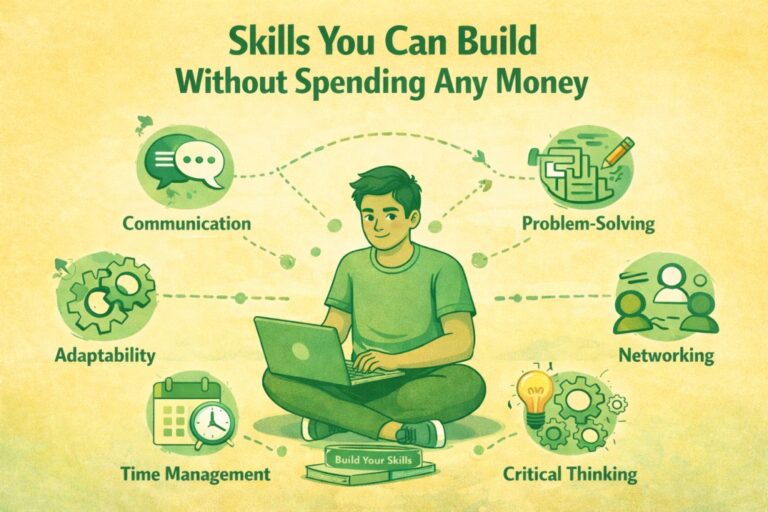
Many people believe that learning new skills requires big changes, long study hours, or expensive courses. But in reality, skill development often happens through small daily habits that gradually improve knowledge and ability.
In today’s fast-changing job market, professionals and students must keep learning continuously. Technologies evolve quickly, industries change, and new career opportunities appear regularly. Those who develop the habit of learning a little every day often stay ahead in their careers.
The good news is that skill development does not always require major effort. Even 15–30 minutes of focused daily practice can lead to significant improvement over time.
Whether you want to improve communication, learn digital skills, or develop professional abilities, simple habits can quietly build strong expertise.
In this article, we will explore daily habits that help improve skills consistently, along with practical strategies to include them in your routine.
If you want to grow professionally, these practical career planning tips can also support your long-term development.
Personal Experience
“During my early career research, I often looked for quick ways to learn new skills. But over time, I realised that the professionals who improved the most were not always studying for hours. Instead, they followed small daily learning habits. Even 20 minutes of focused practice each day helped them gradually build strong professional skills.”
Why Daily Habits Matter for Skill Development
Skill development is rarely the result of one-time learning.
Instead, it usually happens through consistent practice and repetition.
Daily learning habits help in several ways:
- reinforce knowledge through repetition
- build long-term discipline
- improve confidence
- encourage continuous learning
Small daily efforts accumulate over weeks and months, eventually leading to noticeable improvement.
Many modern careers require continuous learning because new tools and technologies appear frequently.
Developing strong skills for future jobs helps professionals remain relevant in the evolving job market.
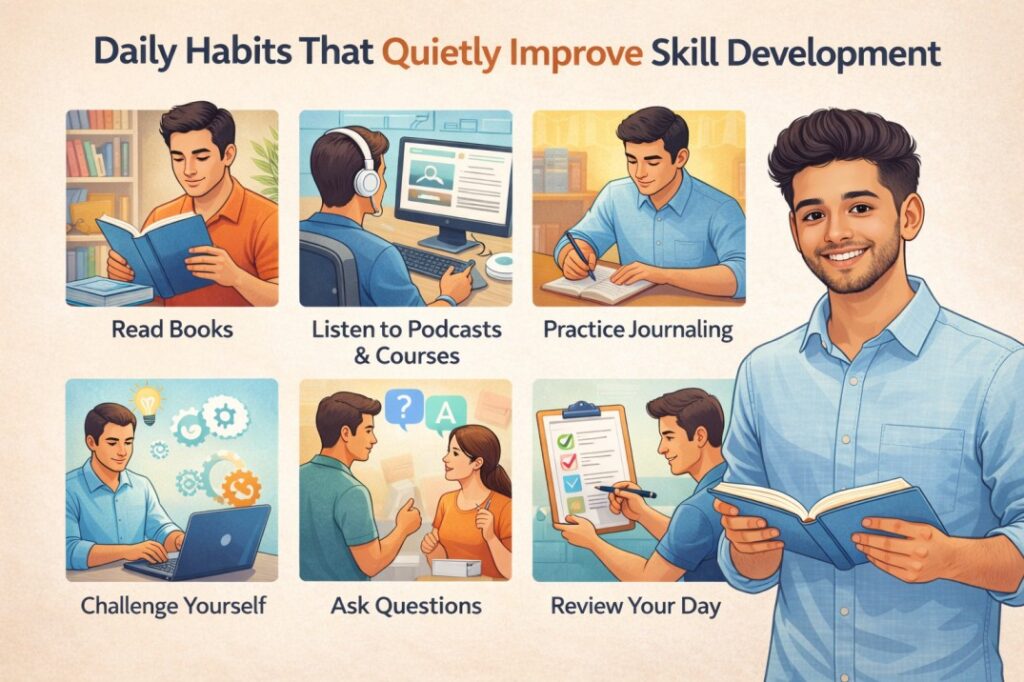
Daily Habits That Improve Skill Development
1. Read for 20 Minutes Every Day
Reading regularly exposes you to new ideas and knowledge.
You can read:
- industry articles
- career blogs
- business news
- educational books
Even short reading sessions help expand knowledge gradually.
2. Practice One Skill Daily
Skill development requires practice.
For example:
- practicing Excel formulas
- coding small programs
- improving design skills
- learning digital marketing tools
Regular practice strengthens understanding.
Students can explore several best online courses for career growth to support daily practice.
3. Reflect on What You Learned
Reflection helps reinforce learning.
At the end of the day, ask yourself:
- What did I learn today?
- What can I improve tomorrow?
- Which skills need more practice?
This habit strengthens long-term retention.
4. Improve Communication Skills
Communication improves through daily practice.
You can practice by:
- speaking confidently with peers
- participating in discussions
- recording yourself speaking
Professionals who communicate clearly often grow faster in their careers.
You can learn more from this guide on how to improve communication skills for jobs.
5. Learn Something New Every Day
Learning something new keeps the brain active.
Examples include:
- discovering a new productivity tool
- reading about industry trends
- watching educational videos
Even short learning sessions can add valuable knowledge.
6. Practice Problem Solving
Problem-solving is one of the most valuable professional skills.
Daily activities that improve problem-solving include:
- solving puzzles
- analysing case studies
- working on small projects
These activities strengthen analytical thinking.
7. Build Consistency
Consistency is the most important habit for skill development.
Instead of learning for long hours occasionally, it is more effective to practice a little every day.
Consistency gradually builds expertise.
Key Benefits of Daily Skill Development Habits
Following daily learning habits offers several advantages.
- Gradual improvement in abilities
- Higher confidence in professional tasks
- Better career opportunities
- Stronger discipline and focus
- Improved adaptability in changing industries
Students who develop these habits early often experience faster career growth.
Understanding skills colleges don’t teach but jobs expect can also help students focus on the right abilities.
Step-by-Step Guide to Build Daily Skill Habits
Step 1: Choose One Skill
Start with one skill you want to improve.
Examples:
- communication
- data analysis
- coding
- digital marketing
Focusing on one skill prevents overwhelm.
Step 2: Allocate Daily Time
Set aside 20–30 minutes daily for learning.
Consistency is more important than duration.
Step 3: Track Progress
Tracking progress motivates improvement.
You can track:
- hours spent learning
- lessons completed
- practice sessions
Tracking helps maintain discipline.
Step 4: Apply What You Learn
Practical application strengthens learning.
Examples:
- creating projects
- practicing exercises
- explaining concepts to others
Step 5: Stay Curious
Curiosity drives continuous learning.
Stay open to exploring new ideas and knowledge.
Students exploring career paths can also consider career options after graduation to align skill development with career goals.
Comparison Table: Occasional Learning vs Daily Learning
| Feature | Occasional Learning | Daily Learning |
|---|---|---|
| Frequency | Inconsistent | Consistent |
| Knowledge Retention | Lower | Higher |
| Skill Improvement | Slow | Steady growth |
| Motivation | Decreases over time | Builds discipline |
| Long-Term Results | Limited progress | Strong expertise |
Real-Life Example (India)
Case Study: Rohan Kulkarni – Daily Learning Success
Rohan graduated with a commerce degree from Pune. Initially, he struggled to find job opportunities because he lacked technical skills.
Instead of enrolling in expensive courses, he decided to build a daily learning routine.
Every day he spent:
- 20 minutes learning Excel
- 20 minutes watching business tutorials
- 20 minutes practicing data analysis
Within six months, Rohan developed strong Excel skills.
He eventually secured a data analyst role in a startup, proving that small daily habits can lead to meaningful career progress.
Common Mistakes to Avoid
1. Trying to Learn Too Many Skills
Focus on one skill at a time.
2. Studying Without Practice
Practice is essential for skill development.
3. Expecting Quick Results
Skill development requires patience and consistency.
4. Skipping Learning Days
Consistency matters more than intensity.
Expert Tips for Building Skill Habits
Career experts recommend several strategies.
1. Keep learning sessions short
Short sessions improve consistency.
2. Focus on practical learning
Practical projects strengthen understanding.
3. Avoid distractions
Dedicated learning time improves productivity.
4. Celebrate small progress
Recognising improvement helps maintain motivation.
Students can even explore remote jobs for Indians once they build useful skills.
Pros and Cons Table
| Pros | Cons |
|---|---|
| Gradual skill improvement | Requires discipline |
| Builds long-term knowledge | Progress may feel slow initially |
| Increases career opportunities | Needs consistent effort |
| Strengthens confidence | Requires patience |
Frequently Asked Questions (FAQs)
1. How long should I practice skills daily?
Even 20–30 minutes per day can lead to noticeable improvement over time.
2. Which skills should students focus on?
Students should focus on communication, digital skills, and problem-solving abilities.
3. Can daily habits really improve career growth?
Yes. Consistent daily learning often leads to strong expertise over time.
4. What if I miss a day of practice?
Missing one day is normal. The key is to continue the habit consistently.
5. Are online resources useful for skill development?
Yes. Online platforms offer many courses and tutorials for skill development.
6. Can these habits help working professionals too?
Absolutely. Daily learning habits help professionals stay updated with industry trends.
Conclusion
Skill development does not always require dramatic changes or long study hours.
Often, the most effective improvement comes from small daily habits practiced consistently over time.
Reading regularly, practicing skills, reflecting on learning, and staying curious are simple habits that can gradually build strong expertise.
In today’s competitive job market, professionals who develop the habit of continuous learning often experience better career opportunities and long-term growth.
By committing to daily learning habits, anyone can steadily improve their skills and build a successful professional future.
References
- National Skill Development Corporation (NSDC)
https://www.nsdcindia.org/ - Skill India Mission – Government of India
https://www.skillindia.gov.in/ - LinkedIn Workplace Learning Report
https://www.linkedin.com/business/talent/blog - NASSCOM Future Skills Report
https://nasscom.in/knowledge-center - Economic Times – Jobs & Careers Section
https://economictimes.indiatimes.com/jobs - Investopedia – Skill Development and Professional Growth
https://www.investopedia.com/careers-4689740
Research Sources
- World Economic Forum – Future of Jobs Report
https://www.weforum.org/reports/the-future-of-jobs-report- NASSCOM Future Skills Report
https://nasscom.in/knowledge-center- LinkedIn Workforce Learning Report
https://www.linkedin.com/business/talent/blog- Economic Times – Jobs & Careers Section
https://economictimes.indiatimes.com/jobs- Investopedia – Career Development Resources
https://www.investopedia.com/careers-4689740