

Introduction
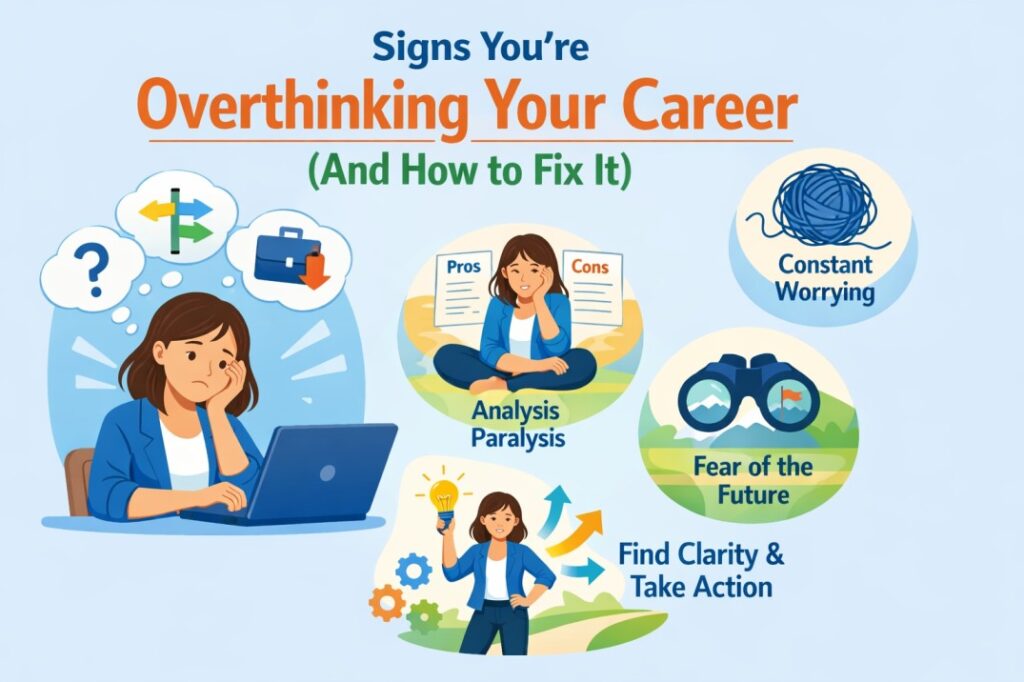
Choosing a career is one of the biggest decisions many people face, especially during college or the early years after graduation. Because the decision feels so important, it is easy to start overthinking every step of the process.
Questions like “What if I choose the wrong career?” or “What if this decision affects my entire future?” often lead to confusion rather than clarity.
While careful thinking is helpful, too much thinking can become a problem. Overthinking can delay decisions, reduce confidence, and create unnecessary stress.
Many students in India spend months or even years trying to find the “perfect career path” instead of taking small steps to explore opportunities.
The truth is that careers rarely follow a straight line. Most professionals learn, adapt, and adjust their paths over time.
This article will help you identify common signs that you may be overthinking your career and provide practical ways to regain clarity and move forward with confidence.
If you are currently exploring different paths, understanding practical career planning tips can also help you organise your thoughts and decisions.
Personal Experience
“While researching career journeys and speaking with students, I noticed that many people delay important decisions because they are waiting for perfect clarity. In reality, most successful professionals did not start with a perfect plan. They experimented, learned new skills, and adjusted their direction as their careers progressed.”
What Does Career Overthinking Mean?
Career overthinking happens when someone spends too much time analysing possibilities without taking action.
Instead of exploring opportunities or gaining experience, they remain stuck in a cycle of constant questioning.
Some common patterns include:
- endlessly researching career options
- worrying about making the wrong choice
- comparing yourself to others
- delaying decisions repeatedly
Overthinking often creates mental pressure without improving decision-making.
Learning about different career options after graduation can help replace overthinking with practical exploration.
Signs You Might Be Overthinking Your Career
1. You Constantly Change Your Career Plans
One week you want to pursue digital marketing.
Next week you consider preparing for government exams.
Later you think about learning programming.
Constantly changing plans can prevent real progress.
2. You Spend More Time Researching Than Doing
Research is useful, but excessive research can become a form of procrastination.
If you spend hours reading career articles but never start learning a skill, it may be a sign of overthinking.
3. You Compare Yourself to Others Too Often
Social media often shows highlights of other people’s achievements.
Comparing your career journey to others can create unnecessary anxiety.
Every person’s career timeline is different.
4. You Wait for the “Perfect Career Choice”
Many people delay action because they want absolute certainty before making a decision.
However, careers often evolve through experience rather than perfect planning.
5. Fear of Failure Stops You From Trying
Overthinking often increases the fear of making mistakes.
Instead of trying something new, people stay in their comfort zone.
In reality, small mistakes often provide valuable learning experiences.
Why Career Overthinking Happens
Several factors contribute to career overthinking.
1. Too Much Information
The internet offers endless career advice, which can sometimes create confusion.
2. Pressure From Family or Society
Many students feel pressure to choose careers that others consider successful.
3. Fear of Making Wrong Decisions
Because careers influence long-term life choices, people may feel afraid to take risks.
4. Lack of Practical Experience
Without real-world exposure, it is difficult to understand which careers feel suitable.
Developing practical skills for future jobs can help reduce uncertainty by providing real experience.
How to Fix Career Overthinking
Instead of staying stuck in analysis, focus on practical action.
Step 1: Limit Career Research Time
Set a time limit for research.
For example:
- 30 minutes reading career information
- then take action such as learning a skill or applying for internships
Step 2: Try Small Experiments
Rather than choosing a career immediately, test different areas.
Examples include:
- short online courses
- freelance projects
- internships
Students can explore freelancing career ideas to gain practical exposure.
Step 3: Focus on Skills, Not Titles
Instead of worrying about job titles, focus on building useful abilities.
Skills often create opportunities across multiple careers.
You can explore several best online courses for career growth to begin learning immediately.
Step 4: Accept That Careers Change
Many professionals change career paths multiple times.
Your first job does not have to define your entire future.
Step 5: Take Imperfect Action
Progress usually comes from trying things, learning from experience, and adjusting over time.
Waiting for the perfect plan often delays growth.
Comparison Table: Overthinking vs Practical Career Approach
| Behaviour | Overthinking Approach | Practical Approach |
|---|---|---|
| Decision Making | Delayed | Action-focused |
| Learning | Mostly theoretical | Practical experiments |
| Confidence | Decreases over time | Improves through experience |
| Career Progress | Slow | Gradual growth |
Real-Life Example (India)
Case Study: Aditya Rao – From Confusion to Clarity
Aditya completed his engineering degree in Hyderabad but felt unsure about his career direction.
For almost a year, he spent time researching different fields such as government exams, MBA programs, and software development.
Eventually, he decided to stop overthinking and start experimenting.
He took a short online course in digital marketing and started freelancing for small businesses.
Within a few months, he discovered that he enjoyed marketing analytics and strategy.
Today, Aditya works in a marketing agency and continues developing his expertise.
His experience showed that action often provides clarity faster than endless thinking.
Common Mistakes to Avoid
1. Waiting for Perfect Clarity
Career clarity often develops through experience.
2. Following Trends Blindly
Just because a career is popular does not mean it suits everyone.
3. Ignoring Skill Development
Skills provide flexibility and open multiple opportunities.
4. Taking Advice From Too Many Sources
Listening to too many opinions can create confusion.
Practical Tips to Stay Mentally Balanced
Career decisions can feel overwhelming, so maintaining balance is important.
1. Focus on small goals
Break career planning into manageable steps.
2. Avoid constant comparison
Everyone progresses at their own pace.
3. Build useful habits
Daily learning can improve confidence.
4. Stay open to new opportunities
Many successful careers evolve unexpectedly.
Pros and Cons of Careful Career Thinking
| Pros | Cons |
|---|---|
| Encourages thoughtful decisions | Can delay action |
| Helps evaluate options | Creates stress when excessive |
| Reduces impulsive choices | May reduce confidence |
Frequently Asked Questions (FAQs)
1. Is it normal to feel confused about your career?
Yes. Many people feel uncertain during the early stages of their careers.
2. How can I stop overthinking career decisions?
Focus on learning skills and gaining practical experience instead of waiting for perfect clarity.
3. Do successful people always know their career path early?
No. Many professionals discover their ideal careers through experimentation.
4. Should I choose a career quickly?
It is better to explore options through practical experiences rather than rushing or delaying indefinitely.
5. Can learning new skills help reduce career confusion?
Yes. Skills create opportunities and make career transitions easier.
6. Is changing career direction a bad decision?
Not necessarily. Many successful professionals change paths as they gain experience.
Conclusion
Career planning is important, but excessive overthinking can slow progress and increase stress.
Instead of waiting for the perfect career decision, it is often more effective to take small steps, learn new skills, and explore opportunities gradually.
Careers rarely follow a fixed path. Most professionals build their careers through experimentation, learning, and adaptation.
If you feel stuck in career overthinking, remember that action creates clarity.
Start with small steps, develop useful skills, and allow your career direction to evolve naturally over time.
References
- LinkedIn Workforce Learning Report
https://www.linkedin.com/business/talent/blog - NASSCOM Future Skills Report
https://nasscom.in/knowledge-center - Economic Times – Career and Jobs Section
https://economictimes.indiatimes.com/jobs - Investopedia – Career Planning and Decision Making
https://www.investopedia.com/careers-4689740 - Skill India Mission – Government of India
https://www.skillindia.gov.in/
Research Sources
- World Economic Forum – Future of Jobs Report
https://www.weforum.org/reports/the-future-of-jobs-report- NASSCOM Future Skills Report
https://nasscom.in/knowledge-center- LinkedIn Workforce Learning Report
https://www.linkedin.com/business/talent/blog- Economic Times – Jobs & Careers Section
https://economictimes.indiatimes.com/jobs- Investopedia – Career Development Resources
https://www.investopedia.com/careers-4689740
