
Introduction
Many students in India believe that interviews are only easy for toppers. If you don’t have very high marks, strong college placements, or an impressive resume, interviews can feel intimidating.
But the truth is, companies do not only hire toppers.
Recruiters often look for qualities like communication, attitude, problem-solving ability, and willingness to learn. In fact, many hiring managers say that students with average marks sometimes perform better in the workplace because they focus more on practical skills.
Every year, thousands of Indian students from tier-2 and tier-3 colleges successfully get jobs in companies simply by preparing well for interviews.
In this article, you will learn how an average student can confidently answer interview questions, what recruiters actually expect, and how to present yourself in a strong way even if your academic record is not extraordinary.
If you are preparing for your first job interview, you may also find these career planning tips helpful. growwithcareer.com
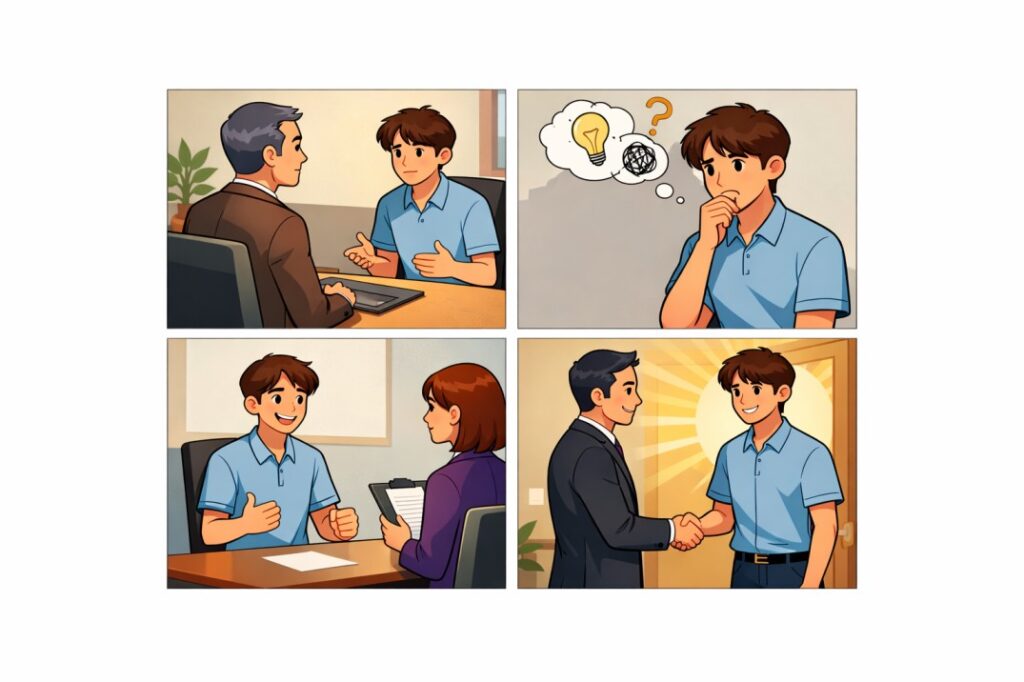
Personal Experience
“While researching careers and speaking with recruiters for GrowWithCareer, I realised that companies rarely expect freshers to know everything. What they really look for is honesty, learning ability, and a positive attitude. Many candidates with average academic records performed very well in interviews simply because they communicated clearly and showed genuine interest in learning.”
Understanding the Reality of Interviews
One of the biggest misconceptions among students is that interviews are only about testing knowledge.
In reality, most interviews for freshers evaluate three things:
- Your attitude
- Your communication skills
- Your ability to learn
Even if you are an average student, you can perform well if you show:
- curiosity
- clear thinking
- willingness to improve
Recruiters know that freshers are still learning. They mainly want to see if you can grow within the company.
If you want to understand what employers value, you can read this article about skills colleges don’t teach but jobs expect.
Common Interview Questions and How Average Students Can Answer Them
Below are some common questions with simple strategies.
1. Tell Me About Yourself
This is usually the first question in interviews.
Many students make the mistake of repeating their resume.
Better approach
Structure your answer in three parts:
- Background
- Skills
- Career interest
Example Answer
“I recently completed my B.Com from XYZ College. During my studies, I developed strong interest in data analysis and Excel. I worked on a small project analysing sales data for a local business, which helped me understand how data supports decision-making. I am now looking for an opportunity where I can learn practical skills and contribute to the team.”
2. Why Should We Hire You?
Average students often panic when they hear this question.
The interviewer simply wants to understand your value and mindset.
Example Answer
“I may not be the top student academically, but I am a quick learner and I work hard to improve my skills. During college, I focused on developing practical abilities like Excel and communication. I believe my willingness to learn and adapt will help me contribute effectively to your team.”
3. What Are Your Strengths?
Choose real strengths that relate to work.
Examples:
- problem solving
- teamwork
- communication
- discipline
Example Answer
“One of my strengths is consistency. Even when a subject was difficult in college, I continued practicing until I improved. This habit has helped me learn new tools and skills over time.”
4. What Are Your Weaknesses?
Interviewers want honesty here.
Avoid answers like:
❌ “I am a perfectionist.”
Instead choose a weakness you are actively improving.
Example Answer
“Earlier, I used to feel nervous while speaking in groups. To improve this, I started participating in presentations and discussions in college. I am still improving, but I feel much more confident now.”
5. Why Do You Want This Job?
Companies want candidates who understand the role.
Example Answer
“I am interested in this role because it allows me to apply analytical skills while also learning about real business problems. I believe this position will help me develop practical experience and grow professionally.”
Key Advantages Average Students Have
Many students underestimate themselves, but average students often have important advantages.
- Strong learning mindset
- Higher motivation to improve
- Better adaptability
- Practical skill focus
- Willingness to work hard
These qualities are highly valued by employers.
If you want to build job-ready skills, explore this guide on top digital skills you can learn at home.
Step-by-Step Interview Preparation Guide
Step 1: Understand the Job Role
Before the interview:
- read the job description carefully
- research the company
- understand the required skills
Step 2: Prepare Basic Interview Answers
Practice answers for questions like:
- Tell me about yourself
- Why should we hire you
- Strengths and weaknesses
- Career goals
Practicing reduces nervousness.
Step 3: Improve Communication
You don’t need perfect English.
Focus on:
- clear sentences
- confident voice
- simple explanations
You can improve communication through this guide on how to improve communication skills.
Step 4: Build Some Practical Skills
Even basic skills can help you stand out.
Examples:
- Excel
- PowerPoint
- digital marketing
- basic coding
- data analysis
You can learn these through the best free websites to learn job skills.
Step 5: Practice Mock Interviews
Ask a friend or mentor to conduct mock interviews.
Practice helps you:
- reduce anxiety
- improve clarity
- gain confidence
Comparison Table: Weak vs Strong Interview Approach
| Feature | Weak Approach | Strong Approach |
|---|---|---|
| Self Introduction | Reads resume | Explains skills and goals |
| Weakness Question | Gives fake answer | Honest improvement story |
| Confidence | Nervous and unsure | Calm and clear |
| Preparation | No research | Understands company |
| Communication | Long confusing answers | Simple and structured answers |
Real-Life Example (India)
Case Study: Priya Nair – Average Student to IT Professional
Priya completed her BCA from a small college in Kerala. She was an average student with around 60% marks.
During campus placements, she struggled in her first few interviews.
Instead of giving up, she started:
- practicing interview questions daily
- improving communication
- learning basic programming skills
Within three months, she cleared an interview at a mid-sized IT company.
Today, she works as a software support analyst earning ₹6 LPA.
Her success came not from top grades but from consistent preparation and confidence.
Common Mistakes to Avoid
1. Apologising for Being an Average Student
Never start with statements like:
❌ “My marks are not very good.”
Focus on your skills and strengths instead.
2. Memorising Scripted Answers
Interviewers can easily detect memorised answers.
Speak naturally.
3. Giving Very Long Answers
Keep answers clear and concise.
4. Ignoring Company Research
Always learn about:
- company products
- industry
- job role
Expert Tips for Freshers
Career experts recommend these strategies:
1. Focus on attitude, not marks
Employers value positive mindset.
2. Practice storytelling
Use small examples from projects or college activities.
3. Improve confidence through preparation
Confidence often comes from practice.
4. Develop job-ready skills
Skills can compensate for average academic performance.
Pros and Cons of Being an Average Student in Interviews
| Pros | Cons |
|---|---|
| Motivated to improve | Lower academic confidence |
| Focus on practical skills | Fear of comparison |
| More adaptable | May underestimate abilities |
| Strong learning attitude | Needs extra preparation |
Frequently Asked Questions (FAQs)
1. Can average students get good jobs?
Yes. Many companies focus more on skills and attitude than academic marks.
2. Do marks matter in interviews?
Marks matter initially, but interview performance often matters more.
3. How can I gain confidence for interviews?
Practice mock interviews, prepare answers, and improve communication skills.
4. What skills should average students focus on?
Focus on:
- communication
- problem solving
- digital skills
- teamwork
5. How many interviews should I attend?
Attend as many as possible. Each interview improves your experience.
6. Can average students succeed in big companies?
Yes. Many successful professionals started as average students but improved through experience and learning.
Conclusion
Being an average student does not mean you cannot succeed in interviews.
Recruiters are not only looking for toppers. They are looking for candidates who show:
- willingness to learn
- clear communication
- positive attitude
- practical thinking
By preparing common interview questions, building useful skills, and practicing regularly, any student can perform confidently in interviews.
Remember, your career is defined by your effort and growth, not just your college marks.
Focus on learning, stay confident, and keep improving.
References
- National Skill Development Corporation (NSDC) – Government of India Skill Development Portal
https://www.nsdcindia.org/ - Skill India Mission – Government of India
https://www.skillindia.gov.in/ - LinkedIn Global Talent Trends Report
https://www.linkedin.com/business/talent/blog - Economic Times – Jobs & Careers Section
https://economictimes.indiatimes.com/jobs - NASSCOM Future of Work Report
https://nasscom.in/knowledge-center - Investopedia – Interview Preparation and Career Advice
https://www.investopedia.com/careers-4689740
Personal Experience
“In several cases, consistent effort and small skill improvements made a bigger difference than formal degrees or early career decisions. This showed me that long-term success is less about getting everything right at the start and more about staying flexible and committed to learning.
”while researching careers and speaking with recruiters, I noticed that many professionals succeed not because they followed a perfect plan, but because they kept learning and adapting. Small skills and consistent effort often mattered more than degrees or early decisions.”
Research Sources
- World Economic Forum – Future of Jobs Report
https://www.weforum.org/reports/the-future-of-jobs-report- NASSCOM Future Skills Report
https://nasscom.in/knowledge-center- LinkedIn Workforce Learning Report
https://www.linkedin.com/business/talent/blog- Economic Times – Jobs & Careers Section
https://economictimes.indiatimes.com/jobs- Investopedia – Career Development Resources
https://www.investopedia.com/careers-4689740