
Introduction
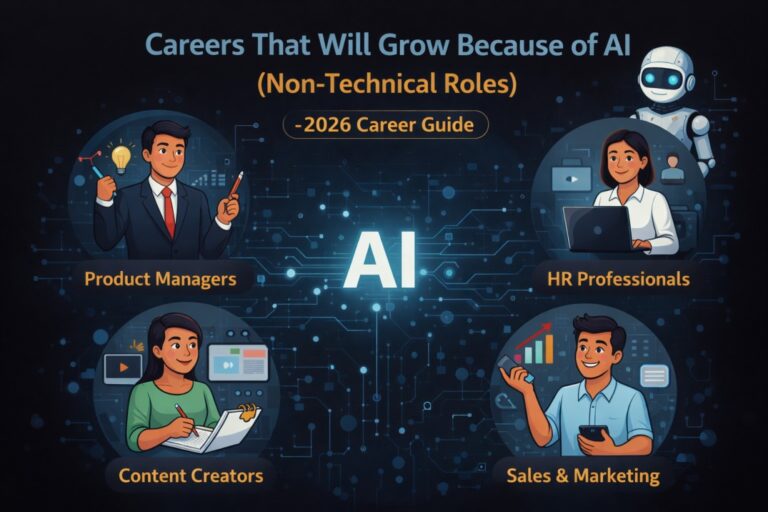
Artificial Intelligence (AI) is changing the way industries operate across the world. From automated customer service systems to AI-powered data analysis, many tasks that were once done by humans are now handled by machines.
Because of this rapid transformation, many students and professionals in India are asking an important question: Will AI replace most jobs in the future?
While AI will certainly automate repetitive tasks, it is unlikely to replace careers that require human judgment, creativity, emotional intelligence, and complex decision-making. In fact, many professions are expected to grow even more as technology evolves.
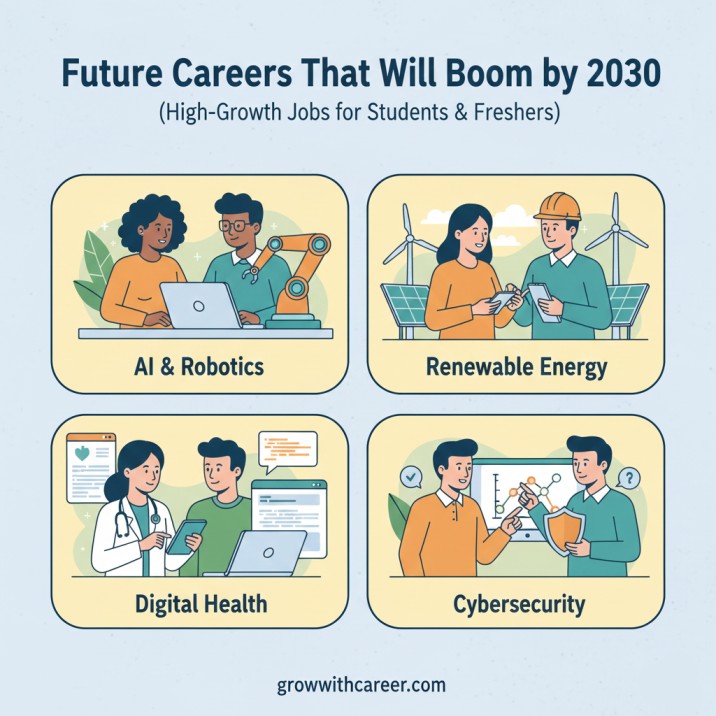
According to several industry reports, the future workforce will need a combination of technical knowledge and human-centric skills. Careers that rely heavily on human interaction, creativity, and strategic thinking are likely to remain valuable.
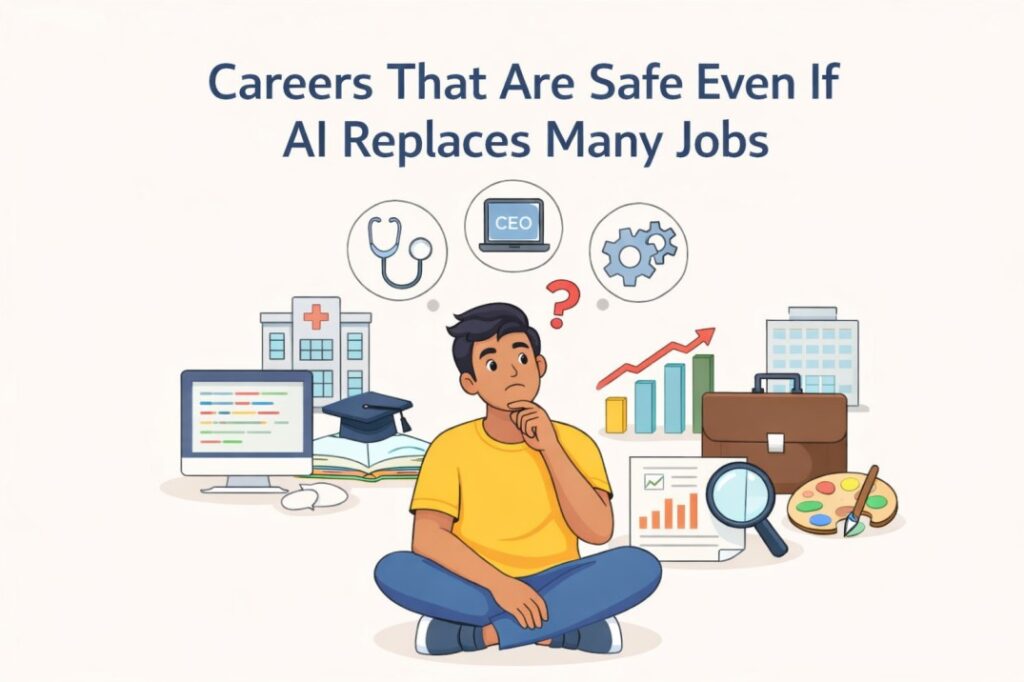
In this article, we will explore careers that are relatively safe even as AI continues to transform the job market, along with the skills required to succeed in these fields.
If you want to prepare for future opportunities, these career planning tips can help you plan your professional path effectively.
Personal Experience
“While researching career trends and speaking with industry professionals, I noticed that many people fear AI will eliminate most jobs. However, recruiters and experts often emphasise that technology usually changes jobs rather than removing them entirely. Careers that involve creativity, human interaction, and complex thinking are likely to remain valuable even as AI becomes more powerful.”
Understanding the Impact of AI on Jobs
AI is particularly effective at handling tasks that are:
- repetitive
- rule-based
- data-heavy
- predictable
For example, AI can automate tasks such as:
- basic data entry
- routine customer support
- simple financial calculations
- automated reporting
However, AI still struggles with areas that require human creativity, empathy, and strategic thinking.
Because of this, many professions will continue to depend on human expertise.
Building skills for future jobs can help professionals adapt to these technological changes.
Careers That Are Safer in the Age of AI
1. Healthcare Professionals
Healthcare requires empathy, human judgment, and patient interaction.
Examples include:
- doctors
- nurses
- physiotherapists
- psychologists
AI may assist medical professionals with diagnostics, but human expertise will remain essential.
2. Teachers and Educators
Education involves mentoring, motivation, and emotional understanding.
Teachers help students develop:
- critical thinking
- creativity
- personal growth
While online tools may support education, human educators will remain crucial.
3. Creative Professionals
AI can generate content, but true creativity still depends on human imagination.
Examples of creative careers include:
- writers
- designers
- filmmakers
- content creators
Creativity combined with technology can create strong career opportunities.
4. Psychologists and Counselors
Mental health professionals rely heavily on empathy and emotional intelligence.
These skills cannot easily be replaced by machines.
Demand for mental health professionals is increasing worldwide.
5. Skilled Trades
Certain hands-on professions are difficult to automate.
Examples include:
- electricians
- plumbers
- technicians
- mechanics
These roles require physical skills and real-world problem solving.
6. Business Strategy and Management
Managers make complex decisions involving people, finances, and long-term planning.
AI can provide data insights, but strategic leadership still requires human judgment.
7. AI and Technology Specialists
Ironically, one of the safest careers in an AI-driven world is working with AI itself.
Examples include:
- AI engineers
- data scientists
- machine learning specialists
These professionals build and manage the technologies shaping the future.
Key Benefits of Choosing AI-Resilient Careers
Careers that are resistant to automation offer several advantages.
- Long-term job stability
- Higher demand for skilled professionals
- Better career growth opportunities
- Greater adaptability to technological changes
Many of these careers combine human skills with technology, making them more sustainable in the future job market.
Understanding skills colleges don’t teach but jobs expect can help students prepare for these roles.
Step-by-Step Guide to Prepare for AI-Safe Careers
Step 1: Develop Human-Centered Skills
Focus on abilities that machines cannot easily replicate.
Examples include:
- communication
- creativity
- emotional intelligence
- leadership
Learning how to improve communication skills for jobs can significantly strengthen career prospects.
Step 2: Combine Technology with Human Skills
Future careers often require both technical knowledge and human abilities.
For example:
- digital marketing combines creativity and analytics
- product management combines technology and strategy
Step 3: Keep Learning Continuously
Technology evolves rapidly.
Professionals must update their skills regularly through learning and training.
Students can explore best online courses for career growth to stay competitive.
Step 4: Gain Practical Experience
Experience strengthens understanding.
Students can gain experience through:
- internships
- projects
- freelance work
Exploring freelancing career ideas can help build valuable skills.
Step 5: Stay Updated with Industry Trends
Understanding technological trends helps professionals anticipate future opportunities.
Continuous learning is essential in an AI-driven world.
Comparison Table: AI-Replaced Jobs vs AI-Resilient Jobs
| Feature | AI-Replaced Jobs | AI-Resilient Jobs |
|---|---|---|
| Task Type | Repetitive | Complex and creative |
| Human Interaction | Minimal | High |
| Decision Making | Rule-based | Strategic thinking |
| Examples | Data entry | Healthcare, education |
| Automation Risk | High | Lower |
Real-Life Example (India)
Case Study: Anjali Mehta – Combining Technology and Creativity
Anjali studied computer science but realised she enjoyed creative work more than pure programming.
She transitioned into UX design, a field that combines technology with human psychology.
Her role involves:
- understanding user behaviour
- designing digital experiences
- collaborating with product teams
Because UX design focuses on human experience, it remains highly valuable even as AI tools evolve.
Today, Anjali works with a product company in Bengaluru and continues to build a successful career.
Common Mistakes to Avoid
1. Ignoring Technology
Even human-centered careers require basic digital knowledge.
2. Relying Only on One Skill
Combining multiple skills increases career security.
3. Avoiding Continuous Learning
Future careers require ongoing learning and adaptability.
4. Following Outdated Career Advice
Career trends evolve quickly with technological changes.
Expert Tips for Future Career Security
Career experts recommend several strategies.
1. Focus on uniquely human abilities
Creativity and empathy remain difficult for AI to replicate.
2. Learn to work with AI
Professionals who use AI tools effectively will have an advantage.
3. Build adaptable skills
Adaptability helps professionals navigate changing industries.
4. Explore emerging career paths
Students can research career options after graduation to find future-ready roles.
Pros and Cons Table
| Pros | Cons |
|---|---|
| Greater job security | Requires continuous learning |
| Strong demand in future industries | Some careers need specialised education |
| Opportunities for career growth | Competitive in certain fields |
| Adaptable to technology | May require new skill development |
Frequently Asked Questions (FAQs)
1. Will AI replace most jobs in the future?
AI will automate some tasks, but many jobs will evolve rather than disappear.
2. Which careers are safest from automation?
Healthcare, education, creative fields, skilled trades, and leadership roles are generally safer.
3. Can AI create new jobs?
Yes. AI is already creating roles in data science, AI development, and digital industries.
4. How can students prepare for an AI-driven future?
Students should focus on both technical and human-centered skills.
5. Are creative careers safe from AI?
Creative fields are less likely to be fully automated because they depend on human imagination.
6. Do all future jobs require technology skills?
Most modern careers require at least basic digital literacy.
Conclusion
Artificial Intelligence is transforming industries, but it does not mean that human workers will become irrelevant.
Instead, the future job market will reward professionals who combine technical knowledge with human skills such as creativity, empathy, and strategic thinking.
Careers in healthcare, education, creative industries, skilled trades, and technology development are likely to remain valuable even as AI evolves.
Students and professionals who focus on continuous learning, adaptability, and human-centered abilities will be well positioned for the future.
Rather than fearing AI, the better approach is to learn how to work alongside it and use it as a tool for growth.
References
- World Economic Forum – Future of Jobs Report
https://www.weforum.org/reports/the-future-of-jobs-report - NASSCOM Future Skills Report
https://nasscom.in/knowledge-center - LinkedIn Global Talent Trends Report
https://www.linkedin.com/business/talent/blog - Economic Times – Jobs & Careers Section
https://economictimes.indiatimes.com/jobs - Investopedia – AI and the Future of Work
https://www.investopedia.com/artificial-intelligence-ai-5072117 - Skill India Mission – Government of India
https://www.skillindia.gov.in/
Personal Experience
“In several cases, consistent effort and small skill improvements made a bigger difference than formal degrees or early career decisions. This showed me that long-term success is less about getting everything right at the start and more about staying flexible and committed to learning.
”while researching careers and speaking with recruiters, I noticed that many professionals succeed not because they followed a perfect plan, but because they kept learning and adapting. Small skills and consistent effort often mattered more than degrees or early decisions.”
Research Sources
- World Economic Forum – Future of Jobs Report
https://www.weforum.org/reports/the-future-of-jobs-report- NASSCOM Future Skills Report
https://nasscom.in/knowledge-center- LinkedIn Workforce Learning Report
https://www.linkedin.com/business/talent/blog- Economic Times – Jobs & Careers Section
https://economictimes.indiatimes.com/jobs- Investopedia – Career Development Resources
https://www.investopedia.com/careers-4689740