

Introduction
For many fresh graduates in India, the first few job interviews can feel intimidating. Students often spend time preparing answers, updating resumes, and researching companies. Yet despite preparation, many candidates struggle to perform well during interviews.
One reason is that freshers often make small mistakes without realizing it. These mistakes are not always obvious, but they can significantly affect how interviewers perceive a candidate.
Recruiters usually evaluate not only technical knowledge but also communication, confidence, attitude, and clarity of thinking. Sometimes candidates lose opportunities not because they lack skills, but because they unintentionally present themselves poorly during interviews.
Understanding these hidden mistakes can help freshers improve their interview performance and increase their chances of getting selected.
In this article, we will explore common interview mistakes freshers don’t realize they are making, along with practical suggestions to fix them.
If you are preparing for interviews, reviewing these career planning tips can also help you build a strong foundation for your job search.
Personal Experience
“While reviewing interview feedback from recruiters and speaking with hiring managers, I noticed that many fresh graduates were rejected not because they lacked knowledge, but because of small behavioural mistakes during interviews. Simple improvements in communication, preparation, and confidence often made a huge difference in how candidates were evaluated.”
Why Freshers Often Make Interview Mistakes
Most students have limited exposure to professional interviews.
Common reasons include:
- lack of real interview experience
- nervousness or anxiety
- unclear understanding of recruiter expectations
- focusing only on technical preparation
These factors can lead to mistakes that candidates do not immediately recognize.
Understanding what recruiters notice can help freshers improve their preparation. You can explore this further in what recruiters notice in a resume in the first 10 seconds.
Interview Mistakes Freshers Often Don’t Realize
1. Giving Memorized Answers
Many students try to memorize answers from the internet.
However, interviewers quickly notice when responses sound rehearsed.
Instead of memorizing scripts, focus on understanding your experiences and explaining them naturally.
2. Talking Too Much or Too Little
Some candidates give extremely long answers, while others respond with only a few words.
Both extremes can create a poor impression.
Good answers are:
- clear
- concise
- relevant
Practicing structured responses can improve communication.
3. Not Researching the Company
Many freshers attend interviews without understanding the company.
Interviewers often ask questions like:
- Why do you want to work here?
- What do you know about our company?
Without research, candidates struggle to answer confidently.
4. Underestimating Soft Skills
Freshers sometimes focus only on technical knowledge.
However, recruiters also evaluate:
- communication
- teamwork
- problem solving
- attitude
Developing skills colleges don’t teach but jobs expect can significantly improve interview performance.
5. Apologizing for Weaknesses
Some candidates start explaining their weaknesses in a negative way.
For example:
❌ “My marks are not very good.”
❌ “I don’t have much experience.”
Instead, focus on learning and improvement.
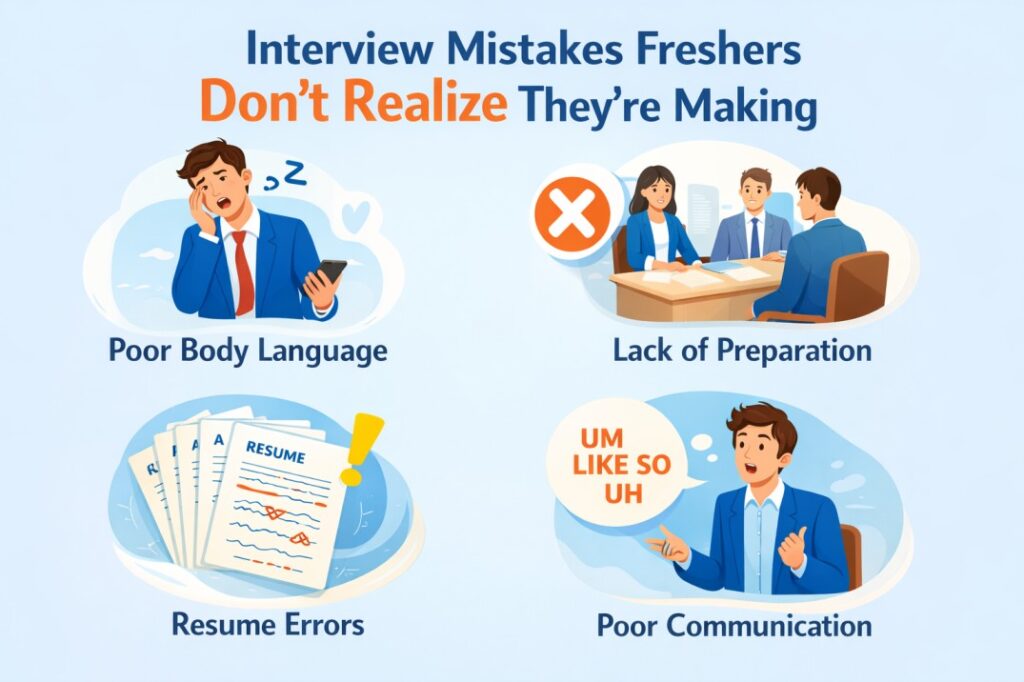
6. Poor Body Language
Body language plays an important role during interviews.
Common mistakes include:
- avoiding eye contact
- slouching posture
- speaking too softly
Confident body language helps create a positive impression.
7. Not Asking Questions at the End
At the end of interviews, recruiters often ask:
“Do you have any questions for us?”
Many freshers say “No.”
Asking thoughtful questions shows interest and curiosity.
Examples:
- “What does success look like in this role?”
- “What skills help employees grow in your company?”
Key Benefits of Avoiding These Mistakes
Improving interview behaviour can provide several advantages.
- Stronger first impressions
- Better communication with recruiters
- Higher confidence during interviews
- Increased chances of getting selected
Many candidates with average academic performance succeed because they present themselves effectively.
If you want to build stronger abilities, learning skills for future jobs can also improve your career prospects.
Step-by-Step Guide to Improve Interview Performance
Step 1: Understand Common Interview Questions
Prepare answers for frequently asked questions such as:
- Tell me about yourself
- What are your strengths and weaknesses?
- Why do you want this job?
Practice explaining answers naturally.
Step 2: Practice Mock Interviews
Mock interviews help reduce nervousness.
You can practice with:
- friends
- mentors
- career coaches
Practice builds confidence.
Step 3: Improve Communication Skills
Clear communication improves interview performance.
Students can explore strategies in how to improve communication skills for jobs.
Step 4: Gain Practical Experience
Practical experience strengthens interview responses.
Examples include:
- internships
- freelance projects
- academic projects
Students can explore freelancing career ideas to build experience.
Step 5: Reflect After Each Interview
After every interview, reflect on:
- what went well
- what could improve
- which questions were difficult
This reflection improves future performance.
Comparison Table: Weak vs Strong Interview Behaviour
| Feature | Weak Approach | Strong Approach |
|---|---|---|
| Preparation | Limited research | Understands company and role |
| Communication | Memorized answers | Natural responses |
| Confidence | Nervous body language | Calm and professional |
| Questions | No questions asked | Thoughtful questions |
Real-Life Example (India)
Case Study: Kavya Sharma – From Rejection to Selection
Kavya completed her MBA from a college in Delhi. During her first few interviews, she struggled to perform well.
After receiving feedback from a mentor, she realized her main mistakes were:
- giving memorized answers
- not researching companies
- speaking too quickly due to nervousness
She started practicing mock interviews and researching companies before interviews.
Within a few months, Kavya improved her communication and confidence.
Eventually, she secured a marketing role in a consulting firm.
Her experience showed that small behavioural improvements can significantly improve interview success.
Common Mistakes to Avoid
1. Arriving Unprepared
Researching the company is essential.
2. Speaking Negatively About Yourself
Focus on strengths and learning experiences.
3. Ignoring Body Language
Professional posture and eye contact create confidence.
4. Not Practicing Interview Answers
Practice improves clarity and reduces nervousness.
Expert Tips for Freshers
Career experts recommend several strategies.
1. Practice storytelling
Use examples from projects or internships.
2. Focus on clarity
Short and structured answers are more effective.
3. Stay calm
Confidence improves when candidates remain relaxed.
4. Continue skill development
Learning through best online courses for career growth can strengthen career opportunities.
Pros and Cons Table
| Pros | Cons |
|---|---|
| Better interview performance | Requires practice |
| Higher chances of job offers | Initial nervousness |
| Improved communication | Requires preparation |
| Strong professional impression | Continuous learning needed |
Frequently Asked Questions (FAQs)
1. Why do freshers struggle in interviews?
Many freshers lack interview experience and may feel nervous during conversations.
2. How can freshers improve interview performance?
Practice mock interviews, research companies, and improve communication skills.
3. Are technical skills enough to get a job?
Technical knowledge is important, but communication and attitude also influence hiring decisions.
4. How many interviews should freshers attend?
Attending multiple interviews helps build experience and confidence.
5. Do interviewers expect perfect answers?
No. Interviewers often evaluate thinking ability and communication rather than perfect responses.
6. Can average students succeed in interviews?
Yes. Many candidates succeed by showing curiosity, willingness to learn, and good communication.
Conclusion
Job interviews can feel challenging for fresh graduates, especially when they lack professional experience. However, many interview failures occur because of small behavioural mistakes that candidates do not realize they are making.
Avoiding memorized answers, improving communication, researching companies, and maintaining confident body language can significantly improve interview performance.
With practice, preparation, and continuous learning, freshers can transform interviews from stressful experiences into valuable opportunities.
Remember that interviews are not just tests of knowledge—they are conversations that help employers understand your potential, attitude, and willingness to grow.
References
- LinkedIn Global Talent Trends Report
https://www.linkedin.com/business/talent/blog - NASSCOM Future Skills Report
https://nasscom.in/knowledge-center - Economic Times – Jobs & Careers Section
https://economictimes.indiatimes.com/jobs - Investopedia – Interview Preparation Guide
https://www.investopedia.com/careers-4689740 - Skill India Mission – Government of India
https://www.skillindia.gov.in/
Research Sources
- World Economic Forum – Future of Jobs Report
https://www.weforum.org/reports/the-future-of-jobs-report- NASSCOM Future Skills Report
https://nasscom.in/knowledge-center- LinkedIn Workforce Learning Report
https://www.linkedin.com/business/talent/blog- Economic Times – Jobs & Careers Section
https://economictimes.indiatimes.com/jobs- Investopedia – Career Development Resources
https://www.investopedia.com/careers-4689740
