
Introduction
Many fresh graduates worry about one common problem when creating their first resume — “I don’t have any job experience. What should I write?”
This is a very common situation for students in India. Most freshers have completed their education but have not yet worked in full-time roles. Because of this, many resumes end up looking very short or incomplete.
However, the truth is that a good resume is not only about job experience. Recruiters understand that freshers are just starting their careers. What they want to see instead is potential, skills, projects, and willingness to learn.
There are several resume sections that freshers can include even without work experience. These sections help employers understand your abilities, interests, and career readiness.
In this article, we will explore resume sections freshers can add even if they have no job experience, along with practical tips to make your resume stronger.
If you are just starting your career journey, these career planning tips can also help you prepare better for the job market.
Personal Experience
“When I reviewed resumes of fresh graduates during career research, I noticed that many students left large blank spaces simply because they didn’t have job experience. However, the strongest fresher resumes were those that highlighted projects, skills, and learning experiences. Recruiters often said these sections helped them understand a candidate’s potential even without professional experience.”
Why Freshers Should Not Worry About Lack of Experience
Many students assume that companies only want candidates with experience.
But most entry-level roles are designed specifically for fresh graduates.
Recruiters usually evaluate freshers based on:
- skills
- learning ability
- projects
- communication
- attitude
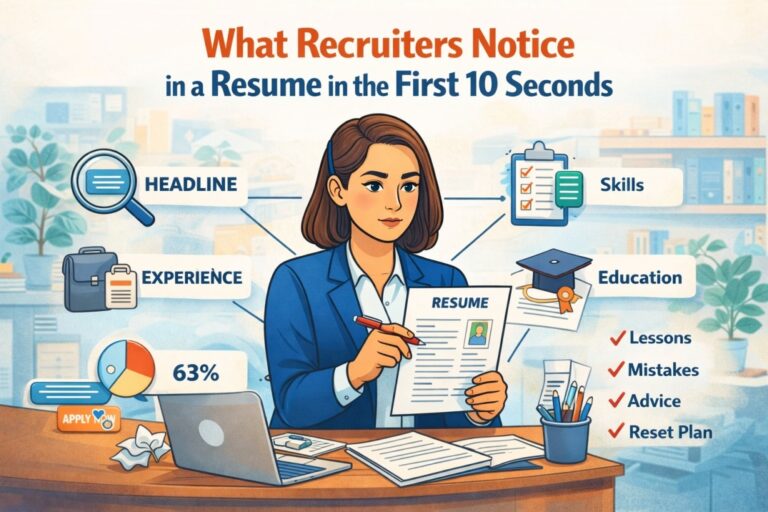
Understanding what recruiters notice quickly can help freshers design better resumes. You can learn more about this in the article what recruiters notice in a resume in the first 10 seconds.
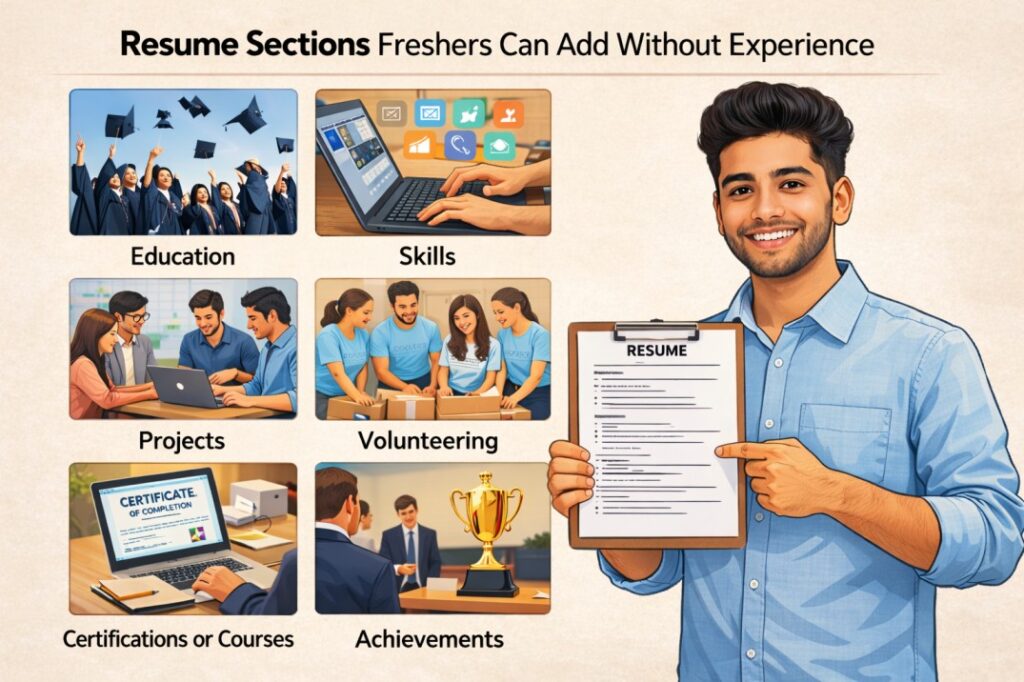
Resume Sections Freshers Can Add Without Experience
Below are several sections that can make a fresher resume more complete and impressive.
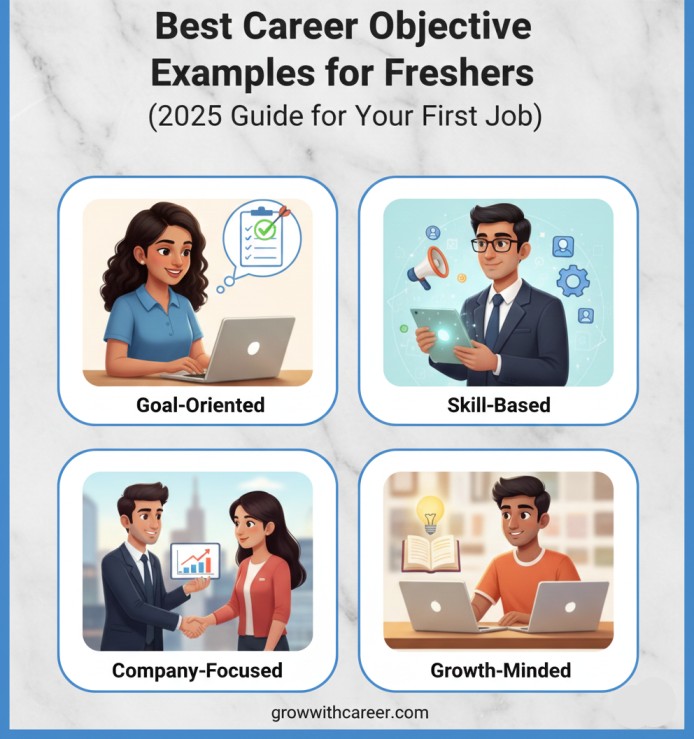
1. Career Objective
A career objective explains your goals and motivation.
It tells employers:
- what role you are looking for
- what skills you bring
- how you want to grow
Example
“Motivated graduate seeking an entry-level role where I can apply analytical and communication skills while gaining practical experience in a professional environment.”
2. Education
Education is usually the most important section for freshers.
Include:
- degree
- college or university
- graduation year
- percentage or CGPA
Example
B.Com – XYZ College, Chennai
Graduation Year: 2025
CGPA: 7.8
3. Academic Projects
Projects are extremely valuable for freshers because they show practical knowledge.
Examples:
- final-year projects
- research assignments
- data analysis projects
- technical builds
Projects demonstrate problem-solving and initiative.
4. Skills Section
The skills section helps recruiters quickly understand your abilities.
Examples include:
Technical skills
- Excel
- Python
- Digital marketing
- Graphic design
Soft skills
- communication
- teamwork
- time management
Students should focus on job-relevant abilities.
You can explore useful skills for future jobs to strengthen this section.
5. Certifications
Certifications show that you are actively learning new things.
Examples include:
- online courses
- professional certificates
- workshop training
These can come from platforms like:
- Coursera
- Google certificates
- Skill India programs
You can find several best online courses for career growth that add value to resumes.
6. Internships (If Available)
Even short internships or training programs can strengthen a resume.
Internships show that you have:
- real-world exposure
- workplace understanding
- practical learning experience
7. Volunteer Experience
Volunteer work demonstrates responsibility and social awareness.
Examples:
- event coordination
- community service
- student organisations
Employers often appreciate candidates who show initiative outside academics.
8. Achievements
Achievements highlight your accomplishments.
Examples include:
- academic awards
- competition wins
- hackathons
- leadership roles in clubs
These details help your resume stand out.
9. Extracurricular Activities
Activities outside academics show personality and teamwork.
Examples:
- sports participation
- debate clubs
- cultural events
- college leadership roles
These experiences often build important soft skills.
Key Benefits of Adding These Resume Sections
Including multiple sections improves your resume in several ways.
- Shows initiative and learning ability
- Demonstrates practical experience
- Highlights personality and interests
- Improves chances of shortlisting
These sections help recruiters see your potential rather than just your experience.
If you want to learn how to avoid common resume mistakes, you can read resume mistakes beginners must avoid.
Step-by-Step Guide to Build a Strong Fresher Resume
Step 1: Start with a Clear Structure
Your resume should include:
- personal details
- career objective
- education
- skills
- projects
- certifications
Step 2: Highlight Skills Clearly
Make sure your skills match the job role.
For example:
Marketing role → digital marketing skills
Data role → Excel or analytics skills
Step 3: Add Projects and Certifications
Projects show practical ability even without job experience.
Certifications demonstrate continuous learning.
Step 4: Keep the Resume Short
Freshers should keep resumes one page long whenever possible.
Step 5: Use Simple Language
Avoid complicated sentences.
Recruiters prefer clear and easy-to-read resumes.
Comparison Table: Weak vs Strong Fresher Resume
| Feature | Weak Resume | Strong Resume |
|---|---|---|
| Skills Section | Very limited | Job-relevant skills |
| Projects | Missing | Clearly explained |
| Certifications | Not included | Included |
| Activities | Ignored | Highlighted |
| Overall Impact | Basic | Professional |
Real-Life Example (India)
Case Study: Arjun Mehta – Fresher Resume Success
Arjun graduated with a BBA degree from a college in Mumbai. He had no full-time job experience when applying for his first role.
Instead of leaving his resume mostly empty, he added sections for:
- academic projects
- digital marketing certifications
- college event management experience
These additions helped recruiters see his potential.
Within two months, Arjun secured a marketing executive role at a startup in Mumbai.
His example shows that a well-structured resume can compensate for lack of experience.
Common Mistakes Freshers Should Avoid
1. Leaving Sections Empty
Even without experience, you can include projects and certifications.
2. Writing Very Long Resumes
Freshers should keep resumes concise.
3. Adding Irrelevant Skills
Focus only on skills relevant to the job.
4. Ignoring Formatting
A clean and organised layout improves readability.
Expert Tips for Fresher Resumes
Career experts recommend several strategies.
1. Focus on potential
Recruiters understand that freshers are still learning.
2. Highlight practical work
Projects and internships are highly valuable.
3. Keep learning new skills
Learning new skills strengthens future opportunities.
Students can even explore remote jobs for Indians that require basic skills.
Pros and Cons Table
| Pros | Cons |
|---|---|
| Shows learning ability | Limited professional experience |
| Highlights skills and projects | Requires careful structuring |
| Demonstrates initiative | Some sections may be small |
| Improves recruiter impression | Needs continuous improvement |
Frequently Asked Questions (FAQs)
1. Can freshers create resumes without job experience?
Yes. Freshers can include projects, certifications, skills, and extracurricular activities.
2. How long should a fresher resume be?
Ideally one page.
3. Are certifications important for freshers?
Yes. Certifications demonstrate learning initiative and skill development.
4. Should hobbies be included in resumes?
Yes, if they show useful skills like teamwork or creativity.
5. Do recruiters check academic projects?
Yes. Projects often help employers understand practical abilities.
6. Can volunteering improve a resume?
Yes. Volunteer experience demonstrates responsibility and teamwork.
Conclusion
Creating a resume without job experience can feel difficult for many freshers. However, lack of experience does not mean your resume has to be empty.
Sections such as skills, projects, certifications, volunteer work, and extracurricular activities can provide valuable insights into your abilities and potential.
Recruiters understand that fresh graduates are just starting their careers. What they want to see is initiative, learning ability, and motivation.
By carefully structuring your resume and highlighting the right sections, you can create a professional resume that stands out even without prior work experience.
The key is to focus on skills, learning, and potential rather than just job history.
References
- National Skill Development Corporation (NSDC)
https://www.nsdcindia.org/ - Skill India Mission – Government of India
https://www.skillindia.gov.in/ - LinkedIn Talent Trends Report
https://www.linkedin.com/business/talent/blog - Economic Times – Jobs & Careers Section
https://economictimes.indiatimes.com/jobs - Investopedia – Resume Writing Guide
https://www.investopedia.com/careers-4689740 - NASSCOM Workforce Insights
https://nasscom.in/knowledge-center
Research Sources
- World Economic Forum – Future of Jobs Report
https://www.weforum.org/reports/the-future-of-jobs-report- NASSCOM Future Skills Report
https://nasscom.in/knowledge-center- LinkedIn Workforce Learning Report
https://www.linkedin.com/business/talent/blog- Economic Times – Jobs & Careers Section
https://economictimes.indiatimes.com/jobs- Investopedia – Career Development Resources
https://www.investopedia.com/careers-4689740